
Interview: Josef Lamercier
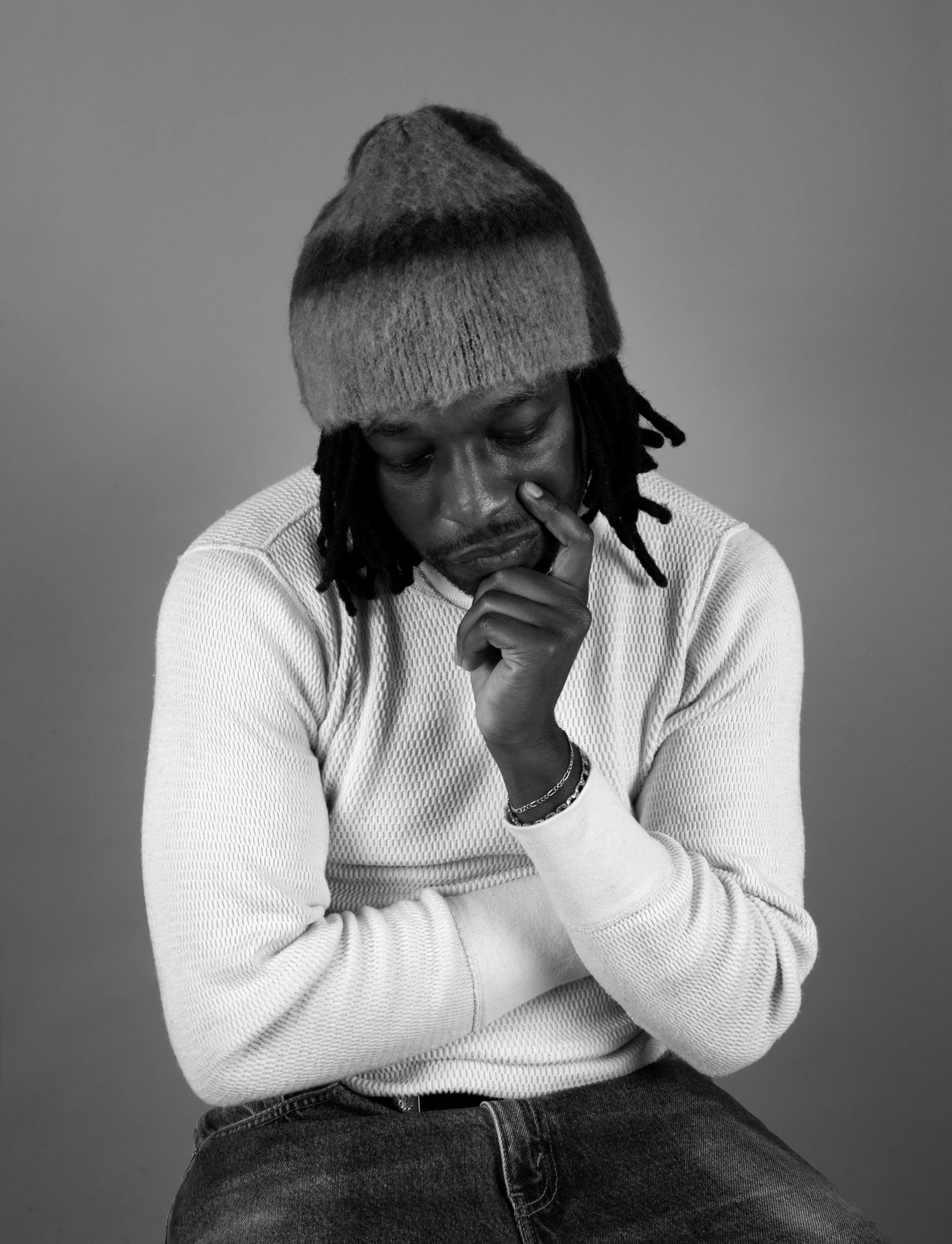
Josef Lamercier’s Reasons We Fall Apart is a breath of fresh air.
For Josef Lamercier, music has always been intertwined with memory. Raised in New Orleans and shaped by a lineage deeply rooted in the city’s musical history, from church choirs to family members who once shared stages with figures like Professor Longhair, Lamercier’s relationship with music was never incidental.
That reckoning sits at the core of Reasons We Fall Apart, Lamercier’s latest offering, a four-track project that delves into the many layers of human emotions. Described by the artist as a personal therapy session, the project documents a period of emotional excavation — confronting anxiety, dependence, family fracture, and the lingering weight of childhood trauma shaped by Hurricane Katrina. Each song functions as a chapter in a larger life cycle, tracing fear, self-confrontation, and the slow process of articulation. Stripped of excess and rooted in honesty, Reasons We Fall Apart marks a creative turning point for the rising star, not as a conclusion, but as the beginning of a much longer conversation with himself.
We had the chance to delve deeper into the background of making Reasons We Fall Apart over the phone.
LISTEN: When did your musical journey start?
Josef Lamercier: I grew up in New Orleans, and my mom was a singer. My family's really big into music, and just like really dialed into intricate music culture in New Orleans.
I had an uncle who was like with Allen Toussaint and all of 'em. You know, the architect of just New Orleans music, Professor Longhair, they used to play for them and go on tour with him. He's the father of Mardi Gras music. So for me, since birth for real, and when I moved to LA a few years ago, my writing journey really started around late 2019, early 2020, right before the pandemic.
LISTEN: Did you play any instruments growing up or in choir, or anything like that?
Josef Lamercier: I mean, voice was always like a thing. My mom was a singer, I grew up around just like singers, man, like church, you know, obviously like the south and everything.
It's just like a huge, Baptist kind of thing. But I didn't start playing instruments for real until like, after Katrina. Started learning piano little by little, and then I'm always like picking up a guitar and putting it down. Like, I never fully learned it like that; for me, it was just learning enough chords to write songs or get a melody out, or whatever. But not even thinking, oh, that songwriting, and it was just like a natural gravitation.
LISTEN: When it comes to your songwriting process, do you start with the melodies first, or do you come up with a concept beforehand, or just freestyle as you go?
Josef Lamercier: Every song is different, man. I think it's just whatever your connection is with — sometimes it'll start with, with just like a loop or, like in a lot of the times, for me, just being in songwriting, I've had to like just learn how to work with other people. Just kind of facilitate the feeling in the room or the emotion in the room, trying to capture whatever you feel on that day, trying to articulate it melodically, through an instrument. And then, you know, obviously, the writing part of it is like a whole nother thing. So, I don't know. I just try to delegate whatever I can. I try not to be too controlling of the room. I try to always leave room for God to move or whatever.
LISTEN: I read that you described Reasons We Fall Apart as a therapy session for you. Was there anything that you uncovered about yourself or that surprised you when you were making this project?
Josef Lamercier: I guess it's been like the feeling of what I've been feeling the last year and a half or two years, since my, like last full length EP Merci.
Josef Lamercier: This is like my first time doing it, by myself. Like last time, I did Merci
I did it with a close friend of mine, who executive-produced it, and this time it was just like, really interesting. I think Reasons Fall Apart to me was uncovering my fear. In a sense of reflecting on my family and how that's shaped me as a person, especially right now. “Firstborn" is about my fear of having kids.
But “Lani’s Song” is my niece. So, she's the firstborn of my sister. So I was thinking about life through a child's perspective. Like we kind of share the same disdain for certain things. She just turned 13 last time I went out there. I was having a conversation with her, and I'm just like, dang, this is everything I felt at like 13, you know? And then, it went deeper.
And it's funny when I wrote that song too. A really great friend of mine who engineered the song for me, his son was, he was like one, and he was in the studio with us. So I'm like, that's like my nephew. So I'm holding him, and I'm listening to the song, and I'm like, okay. And I go back in there. Sometimes I go back there with him. So I'm looking at it through a childlike perspective, but also as an adult, like, damn, if I have my first kid, am I ready for that? You know? Like one of the lines I feel like that sticks out to me always is, ‘If it's dark on both sides, what do I tell my firstborn?’
Like, if I don't clear my trauma out, it's like if I had a kid, what am I gonna tell them? ‘Well, you know, that's just life.’ Or, you know, so it's just like that fear of just like what if it never goes away? What if you just gotta live with it? And then “Daily!” is about like my anxiety.
And just like dependence. I feel like “Chain Smoke” is the same thing. It's just like my dependence; I used to chain smoke weed all the time. I've stopped now, but that was just like my kind of nervous tic. I would just kind of sit there, roll up seven joints a day, and just smoke and just write.
Just realizing how unhealthy that was, and then "The Moon a Balloon" obviously being about Hurricane Katrina. So it's just like each song is like a why to get to that part to me, as it comes, it stems from this feeling of knowing that like everything that's going on in the world I experienced that at like 10 going on 11, you know?
So that was Reasons We Fall Apart for me.
LISTEN: This project is extremely vulnerable, from top to bottom, and it really lets the listener open up into different parts of you. Do you feel that it's difficult to be vulnerable in your music, or does it come second nature?
Josef Lamercier: I was coming from a songwriter's perspective. I've had to write songs for other artists and don't know, even when I was writing for them, I was really being vulnerable, but it was also to like a point where it was like relatable to them, you know?
LISTEN: Mm-hmm.
Josef Lamercier: So for this one, I feel like the reason why it was so short and then the other, the next couple of EPs are gonna be like the same amount of time. Cause the number four is a very significant number to me.
Even the runtime is, I believe like 11 minutes, 11 seconds. So 11 is very significant to me. So, I think when it comes down to vulnerability, I'm just starting to learn how to articulate for real.That was something that I genuinely was focusing on as an artist, which is probably why too, I'm not on social media a lot. Because I feel like that was blurring my articulation. I'm really just trying to have that pure connection to myself in this time as an artist.
LISTEN: Absolutely. I feel that. I deleted TikTok the other day.
LISTEN: When you mentioned that you created Reasons We Fall Apart solo, I wanted to ask, did you feel that, well, obviously, like that process was different than Merci, but do you feel that Reasons We Fall Apart is a turning point for you creatively or a continuation of what's to come?
Josef Lamercier: I think it's a turning point.
LISTEN: How so?
Josef Lamercier: Genuinely, when we were making Merci, I feel like I had somebody to really bounce ideas off of, and it was a little easier. I didn't have to make so many decisions based on myself, and I realized how much of a hindrance that was in that process, because after that, I just really had to restart. I restarted everything. I had to build a new house. I felt like the foundation had cracks in it personally. To me, not towards anybody else. That project was really about grief.
It took me a minute to put this one together, even though it's four songs. Not necessarily like the songwriting or pulling together resources to be able to do something, but I feel like I wanted to as an artist, I'm just really strongly on. Just trying to figure out the truth in my life and trying to express that.
I can't necessarily make songs anymore that don't resonate with me truthfully.
I'm just trying to follow this intuition. I can't really think too much about that, but I do feel like it was a turning point. Like I do feel like I had to, it was also grieving, too. I feel like with artistry, whenever I look at my favorite artists, they had case studies of their career, of the things they were talking about at the time, which would just be like case studies.
Josef Lamercier: And you really have to like, you really have to leave it up to people to like decipher whether or not they're gonna listen intently. Because I do feel like this project is not a passive listening thing. I want people to sit down with it, even if it is short. Or even if it is a song, because I do feel like I try to articulate as much as I can about my personal life, and I feel like other people may be feeling the same thing. We all go through the same human emotions at different times in our lives.
Somebody might find this like 10 years later. Even my music in general, I feel like people might find it 10 years later and be like, oh shit.
Being artists there to some degree, dealing with frequency and stuff is like — your scientists, so there's, there's biologists, there's geologists, there's marine biologists, there's like a certain caliber of science. That a scientist chooses to dedicate their life to.
I feel like, for me growing up in New Orleans, seeing a lot of death, like we celebrate death differently, it's like very honorable. Even leading up to this, from Merci to this project, I feel like I was having an ego death and all of this. And so I feel like that was the turning point for me is just.
What do you wanna say, what do you wanna do, and how do you wanna, you know? How do you want to at least have a mark in this world if people are paying attention or not? That's something I still battle with daily because we were talking about earlier with the social media thing, I feel like there's a lot of noise.
LISTEN: It has that classic kind of sound to it, the instrumentation and the layers and yeah, it's just —
Josef Lamercier: Thank you.
LISTEN: A perfect project, I would say. Without getting too off track, are there any tracks from this project that kind of resonate with you the most? I know we talked about “Firstborn,” but I feel like that might answer the question, but I wanted to just know.
Josef Lamercier: Yeah. I feel like all of them do. I feel like the full project in itself, I feel like “Firstborn.”
“Firstborn” to “The Moon a Balloon.” The sequencing of it to me is like this because I'm also writing other EPs based on how this one ends and how each one of them ends. ‘Cause it's like I'm trying to do 'em in like life cycles. These EPs are like life cycles. I feel like this one, this first one, is like a condemnation.
LISTEN: Okay.
Josef Lamercier: You know, like Reasons We Fall Apart is almost like a condiment. Like you could hear a lot of, like, I don't even know if it necessarily know if it's self-deprecation in this one, it's just like me calling out myself, calling my fears out, calling out my anxiety, calling out chain-smoking, that dependence that I had on weed.
And then “The Moon of Balloon” is like me calling out that childhood trauma of going through Hurricane Katrina, and having to move around and never feeling like I had a home. And also like how that has played into sometimes, like these depressive episodes that I have.
Josef Lamercier: Do you like Fellini?
LISTEN: I don't think I'm familiar.
Josef Lamercier: Oh, you gotta tap into Fellini? You should watch 8½. If you watch 8½, you'll get “The Moon a Balloon” reference because it's like literally the very first scene.
But to me, when I saw that movie, I was like, this is what it's like wanting to fly away. You know? And be away from everything. But you know, you can't, and you gotta deal with it. And even the next one (EP) will be a reconciliation.
God willing, I want to use these EPs as like taste testers, which is why it's so short.
LISTEN: I’ll check it out.
Josef Lamercier: And just really grow from them as a writer, a producer, a curator, and a creative. Even building out like Panęah more as a creative agency for myself.
LISTEN: My last question is, who are you currently listening to right now?
Josef Lamercier: Ooh, let me check. I'm actually listening to a long list of people, like Rakim. I made a playlist recently of all the number ones that were made.
So I'm listening to these playlists I've been making, so it could be a bunch of different artists, but one of my favorite artists right now is Samba Jean-Baptiste. I think he may be from New York. But Samba Jean-Baptiste is crazy. The new Geezer album is crazy. Louis Armstrong, Frank Sinatra. Kid Cudi’s Speeding Bullet to Heaven, which was his most slept on album. I've been listening to that a lot.
Stream Reasons We Fall Apart